Introduction
Few home improvements offer as favourable a combination of low cost, minimal disruption, and long-term financial return as switching from traditional incandescent or halogen lighting to LED technology. Light Emitting Diode lighting has matured enormously over the past decade – early LED bulbs were criticised for harsh, cold light, poor dimming performance, and an aesthetic that felt clinical rather than domestic. Today’s LED products bear virtually no resemblance to those early offerings. Modern LEDs produce light that is warm, rich, and in many cases indistinguishable from the incandescent glow people grew up with, while consuming a fraction of the energy and lasting many times longer.
For UK homeowners, the case for switching has never been stronger. With energy prices remaining significantly elevated compared to pre-2021 levels, the operational cost savings from LED lighting translate into meaningful reductions on household electricity bills. Add the environmental benefit of reduced carbon emissions and the convenience of bulbs that simply don’t need replacing for years at a time, and the question is less “should I switch?” and more “why haven’t I already?”
This guide explains the full case for LED lighting, offers realistic estimates of the savings on offer, and provides practical room-by-room advice for making the transition as effective as possible.
Understanding the Technology: Why LEDs Are So Efficient
Traditional incandescent bulbs – the familiar pear-shaped glass bulbs that dominated homes for over a century – produce light through a fundamentally inefficient process. An electric current heats a thin tungsten filament to temperatures exceeding 2,500°C, causing it to glow. The problem is that approximately 90-95% of the energy consumed in this process is released as heat rather than visible light. The bulb is, in effect, a small electric heater that happens to glow.
Halogen bulbs – the downlighters and spotlights that became standard in UK kitchens, bathrooms, and living rooms from the 1990s onwards – are essentially an evolution of the incandescent principle and share the same fundamental inefficiency. They burn slightly hotter and brighter for a given wattage but remain heavily wasteful by modern standards.
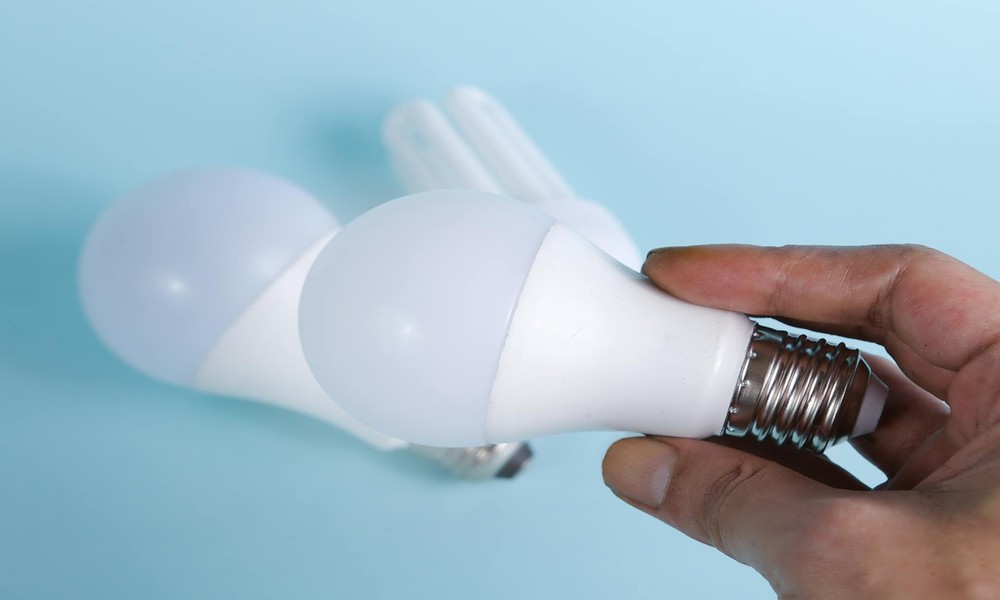
LED technology works on an entirely different principle. Electricity passes through a semiconductor material, which releases energy directly as photons of light through a process called electroluminescence. There is no filament to heat, no glass envelope to pressurise, and no significant heat generated as a by-product of the light-producing process itself. The result is a light source that converts the overwhelming majority of its electrical input into actual visible light.
A modern high-quality LED bulb typically achieves an efficacy of 80-120 lumens per watt – a measure of how much light is produced per unit of energy consumed. A traditional incandescent bulb manages approximately 10-15 lumens per watt. The difference is dramatic, and it translates directly into reduced electricity consumption for any given level of illumination.
The Financial Case: Real Numbers on Real Savings
Bulb-by-Bulb Comparison
The most straightforward way to understand LED savings is to compare the wattage of equivalent bulbs. A traditional 60W incandescent bulb – the standard domestic bulb for general room lighting – produces roughly 800 lumens of light. An LED bulb producing the same 800 lumens typically consumes just 8-9 watts. The energy saving per bulb is therefore in the region of 85%.
For halogen GU10 downlighters – the type commonly found in kitchen ceilings, bathroom spotlights, and recessed living room fittings – the comparison is equally compelling. A standard 50W halogen GU10 can be replaced by an LED equivalent drawing just 5-7 watts, representing a saving of around 85-90% per fitting.
Whole-House Savings Estimation
Consider a typical three-bedroom semi-detached home in the UK with approximately 20 light fittings – a mix of pendant ceiling lights, recessed downlighters, and wall lights. If half those fittings contain 60W incandescent or equivalent halogen bulbs and half contain 50W halogen downlighters, the total installed lighting load is around 1,000 watts.
Replacing every bulb with an LED equivalent reduces that installed load to approximately 130-160 watts – a reduction of around 85%. Assuming an average of 3 hours of use per fitting per day across the home, the annual energy consumption for lighting drops from roughly 1,095 kWh to approximately 160 kWh. At the current UK electricity price of around 24-25p per kWh, that represents an annual saving of approximately £220-£230 per year for the average home – a meaningful sum that recurs every year thereafter.
The upfront cost of replacing all bulbs in such a home, purchasing quality LED products, would typically sit in the range of £60-£120 depending on the number of fittings and product choices. The payback period is therefore often less than six months, making LED switching one of the fastest-returning home energy investments available.
Lifespan Savings
The financial case extends beyond energy to bulb replacement costs. A standard incandescent bulb has a rated lifespan of approximately 1,000 hours. A quality LED bulb is typically rated for 15,000-25,000 hours – fifteen to twenty-five times longer. Even accounting for the higher purchase price of an LED bulb, the total cost of ownership over a decade is dramatically lower. The practical implication is that in most rooms, once you’ve fitted LED bulbs, you won’t need to think about replacing them for years or even decades.
Environmental Benefits
The energy savings described above also translate directly into reduced carbon emissions. The UK’s electricity grid, while increasingly decarbonised through renewable generation, still produces carbon dioxide as a by-product of electricity generation. The Carbon Trust estimates that every kWh of electricity saved prevents the emission of approximately 0.2-0.3 kg of CO₂, depending on the current grid mix. For the home described above, switching fully to LED lighting prevents the emission of around 180-280 kg of CO₂ per year – broadly equivalent to driving a petrol car several hundred miles.
LEDs also contain no mercury – unlike compact fluorescent lamps (CFLs), which require specialist disposal – and their dramatically extended lifespan means fewer bulbs manufactured, packaged, transported, and disposed of over time.
Key Concepts to Understand Before You Buy
Lumens, Not Watts
The most important conceptual shift when buying LED bulbs is to think in lumens rather than watts. Watts measure energy consumption; lumens measure actual light output. When replacing traditional bulbs, use these approximate equivalences as a guide:
A 40W incandescent is replaced by an LED producing around 470 lumens. A 60W incandescent requires an LED of approximately 800 lumens. A 100W incandescent needs an LED of around 1,500 lumens.
Colour Temperature
Colour temperature – measured in Kelvin (K) – determines the warmth or coolness of the light produced. This is one of the most important decisions in LED selection and has a significant impact on the atmosphere of a room.
Warm white light, typically rated at 2,700K, most closely resembles the familiar glow of a traditional incandescent bulb and is the appropriate choice for living rooms, bedrooms, dining areas, and anywhere a relaxed, welcoming atmosphere is desired. Neutral white light at around 3,000-3,500K is slightly crisper and suits kitchens, bathrooms, and home offices. Cool white or daylight-spectrum LEDs at 4,000K and above produce a stark, blue-toned light well suited to task lighting, garages, and utility rooms but feeling harsh and unwelcoming in living spaces.
Dimmability
Not all LED bulbs are dimmable, and not all dimmer switches are compatible with LEDs. Traditional trailing-edge dimmer switches designed for incandescent bulbs may not function correctly – or may cause flickering, buzzing, or premature failure – when paired with LED bulbs. When replacing dimmable halogen or incandescent fittings, specifically purchase bulbs labelled as dimmable LEDs, and consider upgrading dimmer switches to LED-compatible models from manufacturers such as Varilight or Lutron.
CRI: Colour Rendering Index
The Colour Rendering Index (CRI) measures how accurately a light source renders the true colours of objects compared to natural daylight, on a scale of 0 to 100. Incandescent bulbs score around 100 – they render colour almost perfectly. Budget LED bulbs sometimes score as low as 70-75, which can make skin tones appear slightly washed out and colours less vibrant. For living spaces, dining rooms, and anywhere appearance matters, look for LED bulbs with a CRI of 90 or above – often marketed as “high CRI” or “sunlike” products. The difference in real-world appearance is genuinely significant.
Room-by-Room Guide to Making the Switch
Living Room
The living room demands the most careful LED selection because lighting atmosphere is central to the room’s purpose. This is a space where people relax, watch television, entertain, and wind down – and harsh, clinical lighting will undermine all of those activities regardless of how energy-efficient it is.
Choose warm white LEDs at 2,700K throughout, and opt for dimmable versions where a dimmer switch is in place – or where you intend to install one. For pendant ceiling lights, a bulb in the 800-1,000 lumen range is appropriate for a standard room. For reading lamps and floor lamps, look for bulbs with a high CRI (90+) to make the room feel inviting and ensure natural-looking skin tones.
Philips Hue offers an exceptional range of smart LED bulbs that integrate with their Bridge system and app, allowing full colour temperature adjustment, dimming, and scene-setting via smartphone or voice assistant. Their White Ambiance range – which adjusts between warm and cool white – is particularly effective in living rooms where lighting mood needs to shift from energetic daytime settings to relaxed evening atmospheres.
For floor and table lamps with decorative exposed-bulb fittings, Calex (a Dutch brand with strong UK retail presence) produces beautiful filament-style LED bulbs that replicate the warm, glowing aesthetic of vintage Edison-style incandescent bulbs with the efficiency of modern LED technology. These are an excellent choice when the bulb itself is part of the room’s visual design.
Kitchen
The kitchen typically requires brighter, more functional lighting than living spaces, with an emphasis on task illumination over ambience. Recessed GU10 downlighters are the most common fitting type in UK kitchen ceilings, and the transition to LED here is both straightforward and highly rewarding given that halogen downlighters are among the most energy-intensive domestic lights in common use.
For ceiling downlighters, choose LED GU10 bulbs in the 350-500 lumen range at a colour temperature of 3,000K (warm white to neutral white). Avoid very warm 2,700K light in work areas as it can slightly distort the appearance of food colours. Under-cabinet LED strip lighting – used to illuminate worktops directly – transforms kitchen functionality and is far more energy-efficient than the fluorescent tubes it typically replaces.
Integral LED, a UK-based manufacturer, produces a comprehensive and well-regarded range of GU10 LED spotlights that are widely available and offer excellent value with good lumen output and consistent colour temperature. For under-cabinet strip lighting, Sensio produces high-quality LED strip systems specifically designed for kitchen environments, with clean, professional finishes suitable for fitted kitchens at all price points.
Bedroom
The bedroom calls for the warmest, most relaxing LED lighting available. Choose 2,700K warm white bulbs throughout, and if you use bedside reading lamps, prioritise high CRI products so that reading material is well-lit without the light feeling aggressive. Dimmable bulbs are particularly valuable in bedrooms, as the ability to reduce light levels in the evening supports the body’s natural preparation for sleep.
For bedside lamps, LIFX produces smart LED bulbs that require no separate hub or bridge – they connect directly to home Wi-Fi – and offer very fine control over brightness and colour temperature via a smartphone app. The ability to gradually dim bedroom lights as part of a scheduled wind-down routine is a feature that, once used, feels genuinely transformative for sleep quality.
For rooms with integrated ceiling fittings using BC (bayonet cap) or ES (Edison screw) bases, Osram – one of Europe’s most established lighting manufacturers – produces a broad range of classic-form warm white LED bulbs in the 2,700K range that offer a direct and entirely uncomplicated replacement for incandescent bulbs.
Bathroom
Bathroom lighting typically combines a central ceiling fitting for general illumination with mirror lighting for grooming tasks. The IP rating (Ingress Protection) of LED fittings in bathrooms is critical – fittings installed within 60cm of a shower or bath must be rated to at least IP44 (splash-proof) or IP65 (jet-proof) depending on their zone position. Always check IP ratings when selecting bathroom LEDs.
For mirror and vanity lighting, colour accuracy is paramount – it is the space where people assess their appearance before leaving the house. High CRI LEDs (90+) at 3,000K offer a clean, natural light that renders skin tones accurately without the flattering but misleading warmth of very low colour temperature bulbs. Several manufacturers produce LED mirror fittings with integrated CCT (correlated colour temperature) switching, allowing the user to toggle between warm evening light and cooler daylight simulation at the touch of a button.
Knightsbridge is a UK-based manufacturer particularly well regarded for bathroom and architectural LED fittings, producing IP-rated downlighters and decorative fittings that combine compliance with bathroom zone regulations with attractive, contemporary design.
Home Office
The home office requires careful consideration of lighting for sustained screen-based work. The priority is consistent, even illumination at sufficient brightness to reduce eye strain, without glare or reflections on monitor screens. A colour temperature of 3,500-4,000K is appropriate – bright enough to keep alertness levels up, without the jarring blue cast of very cool daylight LEDs. Dimmable fittings are advantageous as they allow adjustment for different tasks – reading physical documents versus extended screen work.
Dyson’s Lightcycle range, while premium-priced, represents one of the most technically sophisticated LED desk lighting solutions available for home use, automatically adjusting colour temperature and brightness based on local daylight conditions and the user’s age (as older eyes require more light). For those spending significant hours working from home, the investment can be genuinely worthwhile.
Hallway, Landing, and Utility Spaces
These transitional and functional spaces are often lit for short durations but across many on/off cycles throughout the day, making them well-suited to LED technology – which, unlike compact fluorescent lamps, reaches full brightness immediately and is unaffected by frequent switching.
For hallways and landings in particular, LED bulbs with motion-detection capability – or paired with occupancy sensor switches – can further reduce energy consumption by ensuring lights are only on when the space is actually in use. Integral LED and Aurora Lighting (a UK-based manufacturer with a strong trade and consumer presence) both offer occupancy-sensor LED downlighters suitable for these applications.
Practical Tips for a Successful Transition
Rather than replacing every bulb in the house at once – which, while ultimately the most economical approach, represents an upfront outlay – many households find it most practical to switch room by room, beginning with the spaces where the most lighting is used for the longest periods. The kitchen, living room, and main bedroom are typically the highest-consumption areas and should therefore be prioritised for the greatest immediate return.
When purchasing, avoid the cheapest possible own-brand options from unverified sources. LED quality varies considerably, and poorly manufactured bulbs may flicker imperceptibly at frequencies that cause headaches over extended use, produce light that shifts in colour temperature as the bulb warms up, or fail to dim smoothly. Sticking to established manufacturers – Philips, Osram, Integral, Calex, LIFX, or Aurora – provides meaningful assurance of quality and consistency.
If your home has a mixture of different bulb bases (BC, ES, GU10, GU5.3, G9), take an inventory before purchasing to ensure you buy the correct fittings. GU10 bases are the twist-lock type found in most modern downlighters. BC (bayonet cap) is the traditional two-pin push-and-twist fitting common in older pendant lights. ES (Edison screw) is the threaded screw fitting increasingly common in contemporary pendants and table lamps.
Conclusion
The switch to LED lighting is one of the simplest, most cost-effective, and most immediately rewarding home improvements available to UK homeowners today. The financial savings are real and recurring, the environmental benefits are meaningful, and modern LED products have long since overcome the early limitations that gave the technology a poor reputation among discerning consumers.
With a thoughtful approach to colour temperature, CRI, and room-appropriate product selection – and with quality products from established manufacturers – the lighting in every room of a house can be transformed into something more efficient, more controllable, and in many cases genuinely more beautiful than what it replaces. The age of the energy-wasting incandescent bulb is well and truly over, and what has replaced it is better in almost every respect.