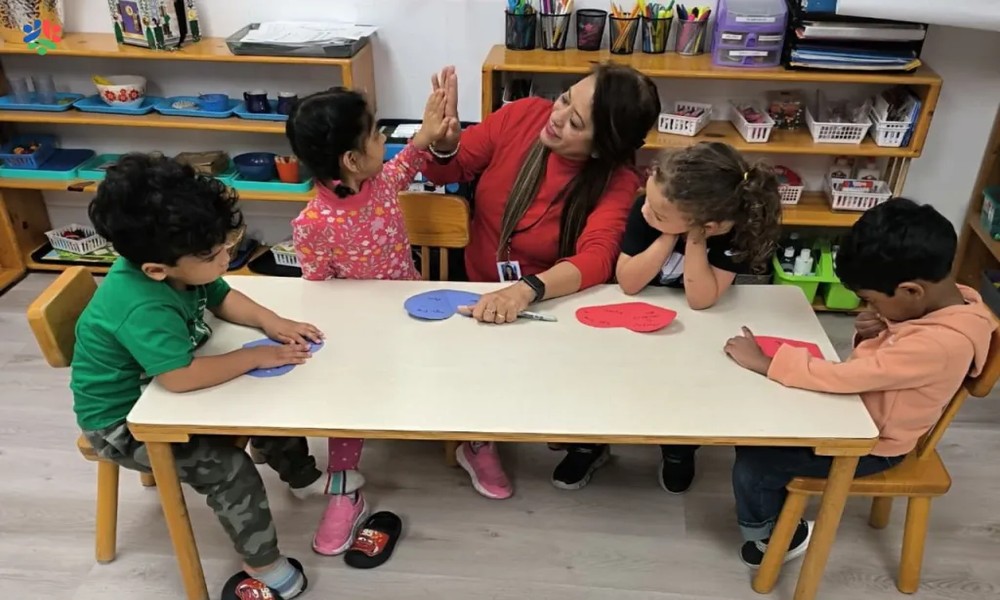
From the moment a baby is born, the journey of learning to communicate begins. It unfolds naturally through exploration, discovery, and careful observation within a nurturing home.
The Montessori approach beautifully aligns with this innate process. It offers a range of child-centred activities that make both spoken and written language wonderfully tangible for young learners.
Imagine a little one tracing letters in a tray of sand or listening to poems whilst matching rhyming blocks. These are not just games. They are fun, focused, and purposeful tasks designed to build essential skills.
For children aged one to five, this educational method helps expand vocabulary, develop sound awareness, and foster pre-reading readiness. It achieves this through the use of real objects, calm repetition, and short, manageable exercises.
The core philosophy is to build strong foundations. The focus is on tactile experiences and interactive engagement, rather than rushing a child into formal reading instruction.
Key Takeaways
- Language learning starts from birth and thrives through exploration, discovery, listening, and observation.
- Montessori techniques use real objects and tactile experiences to make abstract ideas concrete.
- Activities are designed to be enjoyable, focused, and purposeful, aiding vocabulary expansion and sound awareness.
- These methods support pre-reading readiness through calm repetition and short, manageable tasks.
- The approach prioritises building a strong foundation over early formal instruction.
- It aligns with a child’s natural learning processes, making it highly effective for young learners.
Understanding the Montessori Philosophy and Language Learning
Central to this educational method is the belief that children are active constructors of their own knowledge. The philosophy respects each youngster’s unique timeline and intrinsic curiosity. It creates environments where discovery unfolds organically, guided by careful observation.
Adults serve as supportive guides rather than directors. They provide rich, accurate vocabulary during daily interactions. This approach avoids constant quizzing in favour of calm, descriptive speech.
Child-Led Learning Approaches
This way puts the young learner firmly in charge of their exploration. They choose materials that spark their interest, following a natural rhythm. This fosters deep engagement and intrinsic motivation.
Tasks are designed to isolate and practise one specific skill at a time. This prevents overwhelm while building competence systematically. A complete work cycle-start, do, finish, reset-gives each activity structure and purpose.
Sensory and Experiential Methods
Concrete materials make abstract concepts tangible. A child might trace sandpaper letters or match objects to pictures. These hands-on experiences engage sight, touch, and hearing simultaneously.
Multi-sensory input creates stronger neural connections. Repeated exposure to the same materials deepens understanding. Mastery grows through practice, not constant novelty.
| Aspect | Traditional Focus | Montessori Focus |
|---|---|---|
| Role of the Child | Passive recipient of instruction | Active participant in discovery |
| Materials Used | Worksheets, abstract symbols | Real objects, tactile letters |
| Pace of Learning | Set by curriculum or adult | Set by the child’s readiness |
| Skill Introduction | Often multiple concepts at once | One isolated skill per activity |
| Adult’s Role | Instructor and corrector | Guide and observer |
“The child is both a hope and a promise for mankind.”
Together, these principles form a coherent framework for language development. They transform learning from a chore into a joyful process of exploration. The focus remains on building a solid foundation for future literacy.
Creating a Supportive Home Language Environment
You don’t need a classroom to foster early literacy; a thoughtfully prepared shelf at home is a perfect starting point. This dedicated space makes language ideas tangible and invites independent exploration.
Designing an Inviting Language Shelf
A practical shelf might hold four to eight “works” at a time, rotated weekly. This keeps things fresh without overwhelming a young learner.
Start simply with six to twelve small, safe, and recognisable objects. Add a few baskets or trays for organisation, simple picture cards, and a small mat to define the work area. Optional items like tactile letters can be introduced later.
Utilising Natural Materials and Real Objects
Choose materials like wood, metal, and cotton fabric. These offer rich sensory experiences that plastic often cannot match.
Using real objects, rather than just pictures, helps build stronger memory and understanding. This is especially powerful for toddlers.
Here are some age-specific ideas for your shelf setup:
- Ages 1-2: Offer 4-6 works. Include two object baskets, a simple picture-to-object matching set (3 pairs), a basic category sort, and a story basket with a book and props.
- Ages 2-3: Expand to 5-7 works. Add a scavenger photo card set, a classified vocabulary sort, an “I Spy” beginning sound basket, and a syllable clapping game.
Age-Appropriate Language Activities for Toddlers and Preschoolers
A clear progression of playful exercises helps little ones build essential communication skills step by step. The selection should always match a child’s current stage of growth.
Early work focuses on vocabulary, sound awareness, rhythm, and gentle letter exposure. This builds foundations without formal instruction pressure.
Simple Object Matching for Younger Children
Object baskets offer tremendous value for toddlers. They feel like play while systematically building vocabulary through hands-on exploration.
Even very young children can match objects to corresponding pictures. This develops visual perception as they learn to connect 3D items with 2D images.
Mastering this leads naturally to picture-to-picture matching. These tasks refine visual discrimination needed for future symbol recognition.
Structured Activities for Early Readers
Between two and three years of age, youngsters become ready for more organised tasks. These build upon earlier vocabulary and perception skills.
Structured activities might include classified sorting or beginning sound games. They challenge growing capabilities in manageable steps.
| Age Group | Primary Focus | Example Task | Key Skills Developed |
|---|---|---|---|
| 1-2 years | Vocabulary & Sensory Exploration | Object basket with familiar items | Word association, tactile discrimination |
| 2-3 years | Visual Perception & Sound Awareness | Object-to-picture matching sets | Image recognition, comparison skills |
| 3-4 years | Symbol Recognition & Pre-Reading | Picture-to-picture matching games | Visual memory, pattern identification |
Choosing suitable language activities prevents frustration. Tasks that align with a child‘s interests sustain their natural curiosity effectively.
Developing Phonemic Awareness through Play
Before letters on a page make sense, young minds must first learn to listen carefully to the building blocks of speech. This skill, called phonemic awareness, is the ability to hear and manipulate individual sounds in spoken words.
It develops best through fun, pressure-free games that feel like play. These activities engage a child’s auditory skills without formal instruction.
Engaging Rhyming and Sound Games
Rhyming games are a wonderful starting point. They help children notice words that share similar ending sounds.
For example, show a picture of a “cat” and encourage your little one to think of words like “bat” or “hat”. This skill often emerges around age three-and-a-half. Until then, simply sharing poems and songs rich in rhymes is perfect.
The “I Spy” beginning sound game is highly effective from about age two-and-a-half. Place several small objects in a basket.
Say, “I spy something that starts with /b/.” The child finds the object. It’s crucial to use the sound (“/b/”) rather than the letter name.
Syllable clapping is another accessible activity. Clap out the parts in names or words like “ba-na-na”. This helps children break words into chunks, building essential phonemic awareness for future reading.
Enhancing Vocabulary and Speech Skills
Building a child’s lexicon is less about formal lessons and more about weaving language into daily life. This process nurtures both the breadth of words they know and the confidence to use them.
Interactive Storytelling and Role-Play
Asking a youngster to retell a favourite tale in their own words is powerful. It strengthens comprehension and helps them organise thoughts.
Adding a playful twist with toy characters takes this further. Acting out the story allows for imaginative embellishment. This role-play offers valuable, pressure-free speech practice.
By ages three or four, they can become the storyteller. An adult can type as they dictate a tale about their day or a favourite animal. This builds expressive language skills and narrative fluency.
Building a Rich Lexicon through Daily Interactions
A rich vocabulary grows from consistent, meaningful exchanges. From infancy, parents and caregivers build listening skills by talking, singing, and naming objects.
Rewarding a baby’s attempts at identification accelerates this growth. These moments lay the groundwork for all future communication.
By the time a child starts speaking around age two, they have a foundation. They have explored physical words through touch and felt intangible concepts like love or excitement. This deep, sensory understanding supports clear speech.
Integrating Montessori Methods at Home
Bringing these principles into your home is simpler than many parents imagine. It centres on purposeful play rather than rigid schedules or costly resources.
The approach adapts seamlessly to family life. You can weave it into your daily routine without formal training.
Practical Implementation Strategies
Short, focused interactions yield great benefits. Reading a book together or playing a quick sound game counts as valuable time.
Encourage your child to tell stories. This builds narrative skills in a fun, pressure-free way.
Youngsters often use materials as shown, then invent their own rules. This creative adaptation is a natural part of learning. Parents don’t need to control the activities the whole time.
Insights from Eilmar Montessori
Eilmar Montessori highlights how these methods translate effectively from classrooms to living rooms. The core philosophy empowers parents to be confident guides.
Key strategies for successful home implementation include:
- Following your youngster’s lead and observing their interests.
- Using natural materials where possible for richer sensory experiences.
- Providing a variety of language activities to maintain engagement.
- Encouraging self-directed exploration and staying flexible each day.
Some days a child will eagerly engage in Montessori activities. Other days, building a fort is the priority. Viewed through this lens, everything today is a learning opportunity.
Success relies on gentle observation. Offer appropriate materials, then respect your child‘s autonomy and natural rhythm.
Supporting Early Literacy with Practical Language Tools
Tactile materials transform learning letters from a visual task into a multisensory experience. These concrete resources bridge the gap between sound and symbol, making abstract concepts tangible.
Using Sandpaper Letters and Movable Alphabets
Sandpaper letters engage touch to teach letter shapes and sounds. A child traces the gritty texture with their finger while hearing the phonetic sound. This multi-sensory input builds muscle memory for future reading and writing.
You can buy these cards or make them at home. Cut shapes from sandpaper sheets and glue them onto cardboard. Present a few at a time on your language shelf.
The movable alphabet allows early writing before pencil control develops. Children compose simple words using physical tiles.
| Tool | Primary Purpose | Key Benefit | Typical Readiness |
|---|---|---|---|
| Sandpaper Letters | Letter-sound association & shape recognition | Tactile feedback corrects errors instantly | Age 3-4, after sound games |
| Movable Alphabet | Word building & sentence composition | Enables writing without fine motor mastery | Age 4-5, varies by child |
To build a word, place a picture card. Say the sounds slowly, like /c/ /a/ /t/. The child selects tiles to build the word. The image provides a built-in check.
Expert Tips from Eilmar
Eilmar notes that this Montessoriapproach turns children into active writers first. This aligns with the core Montessori principle.
Watch for readiness signs. These include consistent sound recognition and interest in symbols. Introduce materials gradually to avoid pressure on emerging literacy skills.
Focus on the process, not perfect results. The goal is to strengthen fine motor skills and confidence. These language tools make formal reading a natural next step.
Montessori Language Development Activities for Preschoolers
Hands-on exercises provide a concrete pathway for young learners to grasp abstract language concepts. This section offers clear, step-by-step guides for implementing specific tasks at home.
Step-by-Step How-To Guides
Begin with picture-to-object matching for children aged 18 months to three years. Place one familiar item on a mat. Offer two photo cards and invite the child to find the correct picture.
Increase the number of pairs gradually as their skill grows. For a movement-based game, try scavenger photo cards. Use photographs of household items like a spoon or towel.
The child finds the real object and places it beside the matching card. Category sorting is excellent for slightly older youngsters. Show simple category headers, name each item, and guide them to place it under the correct group.
For sound awareness, set up two-sound sorting baskets. Label each with a picture or letter. Name an object slowly, emphasising the first sound. The child sorts it into the correct basket.
A letter sound basket makes a strong connection between symbols and items. Place a sandpaper “b” in a basket with a button, banana, book, and block.
Finally, gather language miniatures and corresponding sandpaper letters on a tray. The child matches each miniature to the letter representing its beginning sound.
Adapting Activities to Individual Needs
These language activities are flexible. Observe each child’s interest and readiness closely. Modify the difficulty or duration to keep the activity engaging without causing frustration.
Some toddlers may need fewer pairs to start. Others might enjoy more complex sorting. This personalised approach helps children build confidence and master skills at their own pace.
Conclusion
Implementing a supportive framework for early learning requires more consistency than complexity. The Montessori approach offers a natural, interactive way to build essential skills. It turns daily moments into rich opportunities for growth.
Parents can begin with simple ideas. Try an object basket with six familiar items. Present it for just three minutes each day. Add a matching task the following week.
This gentle guide helps a child learn through play. Small, regular steps create strong foundations for language development. They are more effective than occasional, elaborate lessons.
Trust the process and observe your children closely. Your attention and rich conversation are the most powerful tools. You can start supporting their journey today.