Finding a hidden leak used to mean lifting floors and opening up walls on a hunch. Today’s technology has largely replaced that guesswork with precise, targeted methods that pinpoint a leak’s exact location before any real work begins. Professional water leak detection and repair now relies on a combination of thermal imaging, acoustic listening, and tracer gas, each suited to different types of concealed plumbing faults.
This guide compares the technologies currently used across the UK, explains how each works, and identifies which method typically applies to different leak scenarios.
Modern leak detection primarily uses three technologies: thermal imaging cameras to spot temperature changes caused by moisture, acoustic listening devices to detect the sound of escaping water, and tracer gas to trace leaks through pressurised systems. Most professional surveys combine two or more methods, allowing a leak to be located accurately, often within a single visit, without unnecessary damage to floors or walls.
Why Non-Invasive Leak Surveys Have Changed the Industry
Traditional leak hunting relied heavily on trial and error, often causing more disruption than the leak itself. Non-invasive leak surveys have shifted that approach entirely, using specialist equipment to pinpoint a leak’s location before any flooring or plasterwork is disturbed.
This matters for two reasons. It reduces repair costs by limiting the area that needs to be opened up, and it speeds up the whole process considerably, with many residential leaks now located within two to four hours rather than days of exploratory work.
Thermal Imaging: Seeing What the Eye Can’t
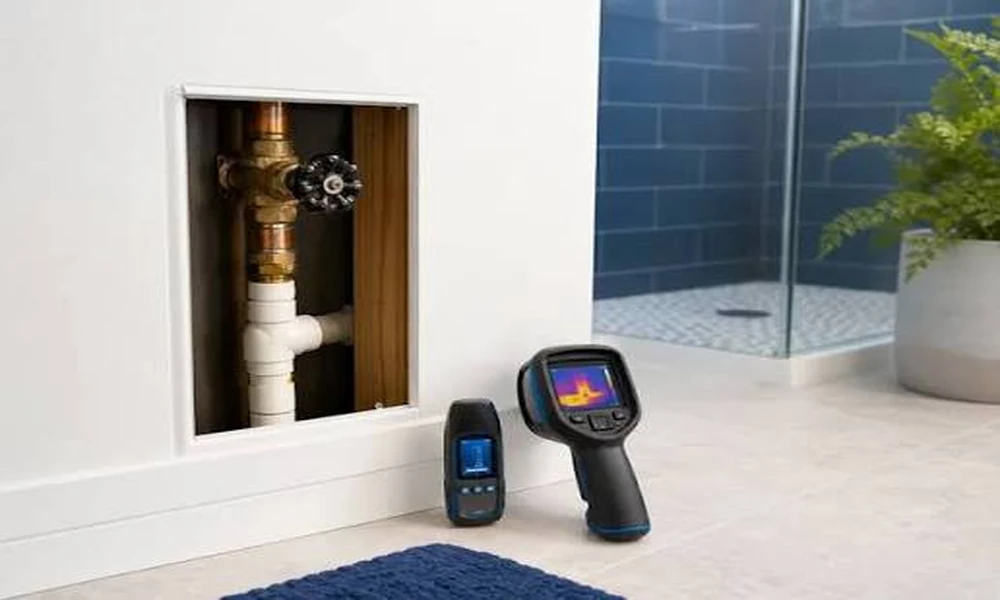
Thermal imaging cameras detect infrared radiation, effectively reading the surface temperature of walls, floors, and ceilings.
Water sitting where it shouldn’t be creates a temperature difference compared to the surrounding dry material, usually appearing as a cooler patch on a thermal image, though heating system leaks can show up as unexpected warm areas instead. This method works particularly well for locating leaks within underfloor heating systems or moisture spreading behind plasterboard.
Acoustic Listening Devices for Water Escape Detection
Acoustic detection works on a simple principle: escaping water under pressure makes a distinctive sound, even through concrete, tarmac, or soil.
Water escape detection using acoustic equipment amplifies these sounds through sensitive microphones and ground listening devices, allowing an engineer to pinpoint a leak’s location often to within a few centimetres. This method is particularly effective for pressurised mains supply leaks and underground pipe diagnostics, where the leak itself is completely inaccessible without excavation.
Underground Pipe Diagnostics: Locating What’s Buried
Leaks beneath driveways, gardens, or under a property’s foundations present a specific challenge, since digging blindly to search for the source is both expensive and unnecessarily disruptive.
Underground pipe diagnostics typically combine acoustic listening with specialist ground microphones, allowing engineers to trace the exact route of buried pipework and identify precisely where pressure is being lost. Combined with pressure testing beforehand, this narrows down the search area dramatically before any excavation begins.
Tracer Gas: A Precise Alternative for Concealed Plumbing Faults
Tracer gas detection introduces a safe, non-toxic gas mixture, typically containing hydrogen, into an empty pipe under pressure.
The gas escapes through even the smallest crack or joint failure and rises through flooring or wall materials to the surface, where a sensitive detector picks up its presence. Concealed plumbing faults that don’t produce a strong enough acoustic signal, such as very slow leaks, are often better suited to tracer gas than acoustic methods alone.
Comparing the Main Detection Methods
Understanding which technology suits which scenario helps set expectations before a survey begins.
| Method | Best Suited For | How It Works |
|---|---|---|
| Thermal imaging | Moisture behind walls, underfloor heating leaks | Detects temperature differences |
| Acoustic listening | Pressurised mains leaks, underground pipes | Detects sound of escaping water |
| Tracer gas | Slow leaks, concealed joints | Detects gas escaping through cracks |
| Moisture meters | Confirming dampness after initial detection | Measures moisture content directly |
| Pressure testing | Confirming a leak exists before further testing | Monitors pressure loss over time |
Structural Moisture Assessment: Confirming the Full Picture
Locating the source of a leak is only part of the process. Understanding how far moisture has actually spread matters just as much for planning repairs properly.
Structural moisture assessment uses handheld moisture meters to measure water content within walls, floors, and timber, helping engineers map the full extent of water damage rather than just the leak’s origin point. This step is particularly important for insurance claims, since it provides clear evidence of both the cause and the scale of any damage.
What a Typical Leak Detection Visit Involves
Most professional surveys follow a similar structured sequence, regardless of which specific technologies end up being used.
- Initial pressure testing to confirm a leak is present
- Thermal imaging to identify likely areas of moisture
- Acoustic listening to narrow down the precise location
- Tracer gas testing if the leak remains difficult to pinpoint
- Moisture assessment to map the extent of any damage
- A small, targeted access point created only where needed
Frequently Asked Questions
How accurate is modern leak detection technology?
Combined methods such as acoustic listening and thermal imaging can often locate a leak to within a few centimetres, though accuracy depends on the property and leak type.
Is leak detection covered by home insurance?
Many UK buildings insurance policies include trace and access cover, typically between five and ten thousand pounds, covering both the detection and initial access costs.
How long does a leak detection survey take?
Most residential leaks are located within two to four hours, though complex or multiple suspected areas can take longer.
Will leak detection damage my property?
Non-invasive methods are designed to avoid unnecessary damage, with small access points only created once the leak’s location is confirmed.
What’s the difference between thermal imaging and tracer gas?
Thermal imaging detects temperature changes caused by moisture, while tracer gas physically escapes through the leak itself and is detected at the surface.
Can these methods find leaks under concrete floors or driveways?
Yes. Acoustic listening and ground microphones are specifically effective at tracing leaks beneath concrete, tarmac, and soil.
Finding the Right Leak Detection Approach
Modern leak detection has transformed what used to be a disruptive, uncertain process into a precise, evidence-based one. Combining thermal imaging, acoustic listening, and tracer gas allows engineers to locate hidden leaks accurately, protecting both your property and your budget in the process.
0800 Homefix provides professional water leak detection and repair across London and the South East, using thermal imaging, acoustic detection, and tracer gas technology to pinpoint leaks accurately, backed by a 24/7 emergency response and no call-out fee.