A well-planned doorway can influence how rooms connect visually. The right proportions help nearby areas feel part of one setting. Material choices can relate the entrance to floors, furniture, or wall finishes. Glass details may also carry light between adjoining spaces. For design references and available details, see website information. Careful coordination keeps each area distinct while maintaining a consistent appearance.
Door Styles Connect Interior Design Elements
A doorway should relate to the room around it. Its shape can follow nearby architectural lines and existing proportions.
Simple framing can help different areas appear visually connected. This approach keeps transitions clear without making them feel separate.
Material Choices Shape Room Continuity
Wood surfaces can relate to flooring or built-in furniture. Metal elements may match handles, lighting fixtures, or other fittings. The selection should support the materials already present in adjoining rooms.
Interior Features Work Better Together
Several details can support a connected appearance across adjoining areas. Each choice should serve a clear visual purpose.
- Matching wood tones can link doors with nearby flooring surfaces.
- Consistent frame widths help openings maintain a measured appearance.
- Repeated glass shapes connect adjoining areas through shared visual details.
- Similar handle finishes create continuity across separate interior sections.
- Complementary trim profiles help doorways relate to surrounding wall details.
- Balanced panel sizes prevent one entrance from appearing visually heavier.
- Coordinated surface textures add connection without making rooms identical.
- Related ceiling lines can guide doorway proportions across adjoining areas.
Glass Details Extend Interior Character
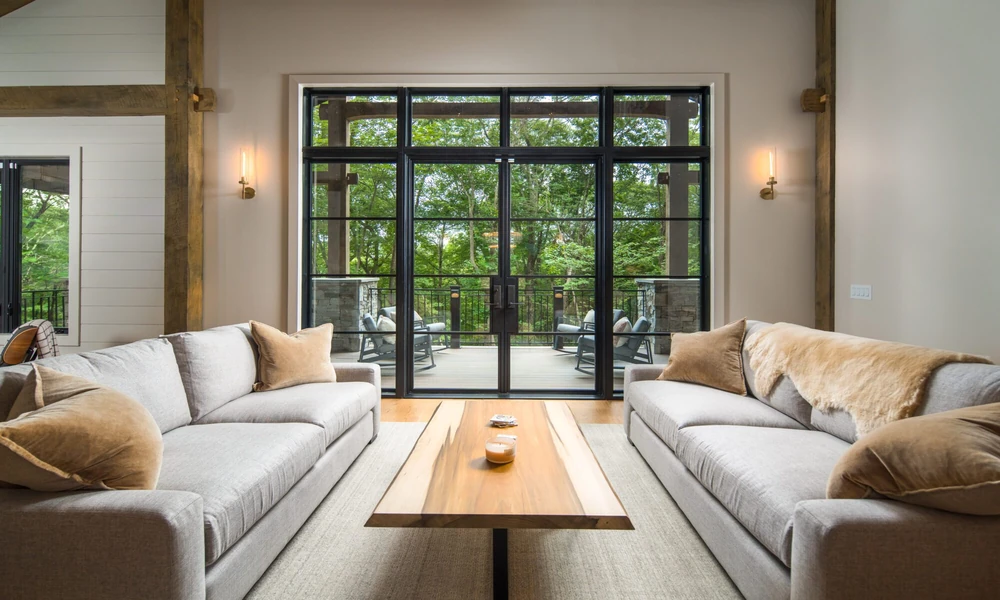
Glass can carry light from one section toward another. Clear surfaces create open views between selected areas.
Textured sections offer more privacy while retaining some brightness. The amount of glass should suit the room’s purpose and layout.
Entryways Coordinate with Nearby Rooms
Door placement affects movement between adjoining spaces. A well-positioned opening can support natural circulation through the home.
The doorway should also leave enough visual space around furniture. Good spacing prevents the entrance from feeling crowded or disconnected.
Which Details Help Interior Door Designs Feel Connected?
Room connections depend on more than the appearance of one doorway. Nearby finishes should relate through tone, texture, scale, or material.
A consistent approach can make separate rooms feel visually connected. At the same time, each space should retain its own purpose and character.
Room Transitions Feel More Connected
Changes between rooms become easier to read when proportions remain consistent. A shared design language can link separate areas without removing their character.
References from see website material may help compare different design directions. The strongest result comes from coordinated choices rather than excessive decoration.
Common Questions About Interior Design
- Do matching doors make every room look identical? No, related details can preserve individual room character.
- Should glass appear throughout the home? Selective use can connect spaces without reducing privacy.
- Does hardware need to match furniture? Similar finishes can create a more coordinated visual relationship.
- How should door size be selected? Consider wall height, room scale, furniture, and opening purpose.
- Can different materials work together? Yes, careful proportion and related tones can connect varied surfaces.
- Should every doorway use identical details? Repeated design cues are enough to create visual consistency.
Thoughtful Design Creates Lasting Cohesion
Good interior planning depends on measured choices rather than excessive detail. Each doorway should support its surrounding room without copying it completely. Materials, finishes, proportions, and hardware need careful coordination. Small differences can remain while the overall arrangement stays consistent.