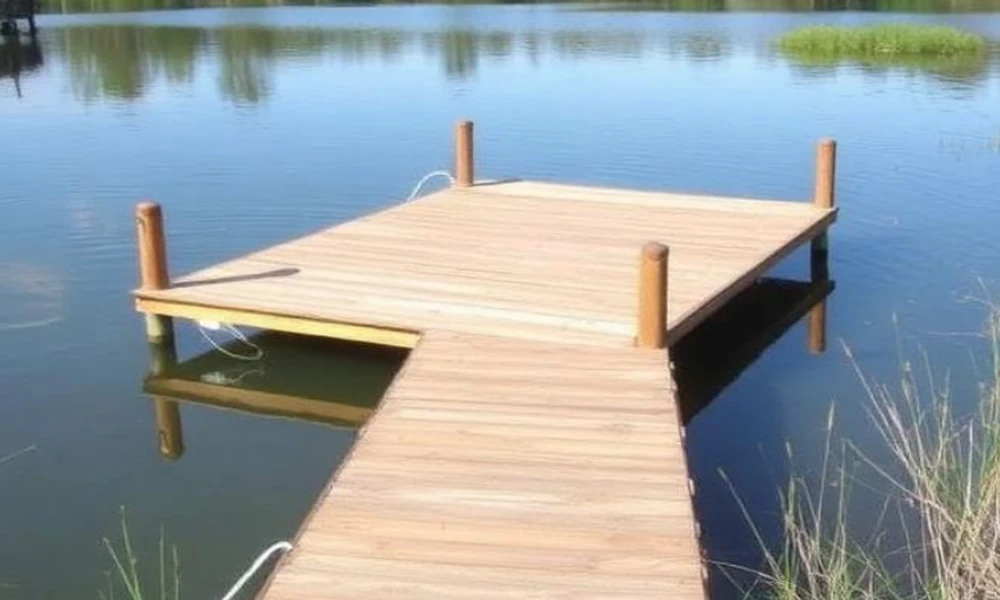
On the outside, it appears as if a dock is straightforward: pilings, frames, decking, and some cleats. But water isn’t an easy neighbour. Sun, salt, wind, the wake, and tide movements affect your dock each and every day, and the cheapest materials can be damaged quickly. If you’re looking to build your dock to be secure and attractive, as well as not cause you to break the bank with constant repairs, the choices of materials you choose for your dock are crucial, far more so than every other option.
Durability outperforms replacement
The marine environment is a snare for the quickest routes. The wood that is inferior rots, the basic steel rusts, and cheap plastics become brittle under the sunlight. Good quality materials ward off the three main adversaries: UV, moisture, and corrosion. Aluminum that is marine-grade resists oxidation. Hot-dipped galvanized and suitable stainless fasteners maintain their strength. Pressure-treated structural lumber and certain hardwoods resist decay; UV-stabilized composites as well as polyethylene decking resist sunlight. Each upgrade increases the service life and cuts down on what is known as the “repair season,” which many homeowners take for granted.
Safety isn’t an option
Docks are a pathway across water. If the material fails, injuries occur. Barefoot-friendly decking with high-friction is less prone to slips. Through-bolted, corrosion-resistant hardware holds handrails, ladders, and cleats exactly where they should be when pulling a side way from a boat that is blown. A high-quality floating (encapsulated foam or HDPE that is strong) keeps water out of the way and can cause a section to be tilted just enough to cause danger to the user. The best materials don’t just appear premium they also hold up quickly when people depend on them.
True cost = Lifecycle Cost
The sticker price is high. Maintenance is silent… up until it’s not. Less expensive decking may save you some cash today, but could need sanding, sealing or a complete replacement much sooner. Cheap fasteners can cause corrosion, stain the timber around them, and can cause loose connections. You’re paying for carpenters and a plethora of tools anyway. Examine all costs of ownership, including anticipated service life, maintenance schedule, as well as access to labor. The cost of downtime in case sections need to be shut or removed.
Structural integrity begins at the lowest point.
Anchoring and pilings are the basis. Well-treated, dense wood or composite pilings placed at a suitable depth and spacing can withstand upward and lateral forces from the waves or wake. For floating systems, select anchors (such as helical or engineered deadweight) and ropes/chains that are appropriate for the site’s conditions, and with the right hardware to resist corrosion in crevices. Do not skimp on this, and the finest decking on the planet won’t stop a dock from creeping and racks or walks its way through the season.
Hardware is the secret hero
Bolts and washers, hinges, pile guides, and cleats are used to carry loads that are concentrated. The use of marine-appropriate alloys as well as protective coatings keeps threads from seizing and plates from forming pits. Mix and match metals in a reckless manner, and galvanic corrosion will take care of the rest. Hardware that is of high quality also has tolerances that minimize the play of joints, ensuring that movements are controlled and not destructive.
Decking creates the experience
The decking you can see and feel. It requires constant sunshine and pedestrian traffic. Polyethylene boards and UV-stable composites are resistant to fading, splintering, and cupping. If you prefer the appearance of wood, pick the right species and treatment for wet use and plan for realistic maintenance. Think about freeboard and flex: higher-quality, stiffer boards feel more solid beneath your feet, which is important when loading carts, coolers, or a smaller crane.
Environmental resilience
High-quality materials are the most sustainable option. Encapsulated floats help reduce the risk of breaking; corrosion-resistant metals release fewer particles; and long-lasting decking that is long-lasting means fewer replacements to landfills. In water that is sensitive, stable, well-anchored structures that are constructed with robust materials will protect seagrass, minimize turbidity caused by repairs, and reduce the chance of fragments that have been broken escaping into habitats.
A quick pre-build checklist
- Check anchors/pilings, spacing, and load expectations for wake, local wind, and tide
- Select marine-grade metals and fasteners that are compatible to stop galvanic corrosion
- Select a decking that can withstand UV, be slip-resistant, and be comfortable barefoot wear
- Make use of encapsulated and robust HDPE flots that are appropriate for the live load you are carrying
- Plan for access to maintenance Panels that can be removed and clear hardware selections with documented specifications
- Examine warranties and determine what can cause them to be invalid (salt exposure or cleaners, types of fasteners, etc.)
In short, the best materials can make docks more secure, durable, and more affordable to maintain in the long run. They don’t just stand up to the harsh marine environment; they work alongside it. Create with this mindset, and your dock will feel less like something to be managed and more like a place to enjoy the best things, like quiet mornings, effortless tie-ups, and sunsets that you do not have to get up early because of a broken part.
This post was written by a professional at Supreme Marine Floating Docks. Supreme Marine Floating Docks is dedicated to providing top-quality floating dock services Miami and marine accessories that combine durability, innovation, and superior performance. While we are a new brand, our team brings over 50 years of combined industry experience, making us a trusted name in the marine world. We are passionate about designing and delivering products that meet the highest standards, ensuring reliability and longevity in all marine environments. Whether for residential, commercial, or recreational use, our docks are crafted with precision and care, setting a new benchmark in the industry. At Supreme Marine, we don’t just build docks-we create lasting solutions.